Explore Whale Species from the Arctic and around the World
Explore Whale Species from the Arctic and around the World:
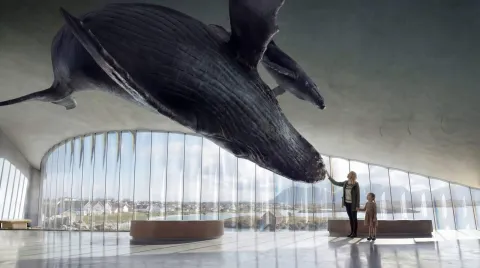
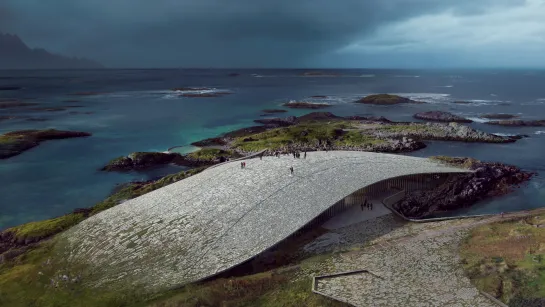
Whales are among the most fascinating creatures on Earth. As the largest animals to ever live on our planet, they captivate our imagination and are integral to the health of our oceans. If you’ve ever wondered about the behaviour, biology or historical and cultural significance of these deep-ocean giants, The Whale, an experience and knowledge centre on the island of Andøya in northern Norway, is not to be missed.
Whales and the deep ocean of the Arctic ecosystem
Located the Vesterålen region of Northern Norway, an area renowned for its rich marine life, The Whale taps into its surroundings to educate visitors about this Arctic deep-sea environment, the ocean giants that inhabit them and the critical role that whales play in maintaining the balance of ocean ecosystems.
The region's deep ocean systems, especially the Bleik Canyon, play a critical role in supporting the abundance of marine life, including whales. The Bleik Canyon is a deep-sea trench that funnels nutrient-rich waters from the depths of the ocean to the surface. This process creates ideal feeding conditions for a variety of whale species, providing them with the food they need to sustain their long migrations.
The ocean systems in this region are home to some of the most enigmatic creatures on Earth. As whales dive to incredible depths in search of food, they interact with an entire ecosystem of animals that live in the abyss. The region is one of the most exciting places to watch whales – and learn about whales.
Whale species found in Arctic waters near Andøya
One of the most exciting aspects of The Whale is the chance to learn about the many whale species, which can be spotted in the Arctic waters. Whale watching in Andøy offers an opportunity to see a wide variety of species in their natural environment.
The diversity of species in this Arctic region is exceptional, and at The Whale, visitors are introduced to a wide range of marine species, including:
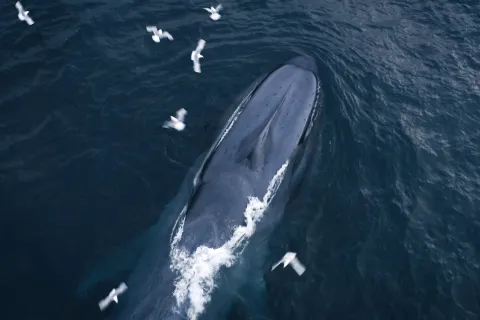
Blue Whale:
The largest animal to have ever existed, the blue whale can grow up to 30 metres in length. Despite their enormous size, these majestic creatures are often elusive, making sightings especially rare and memorable. The blue whale is a baleen whale that feeds primarily on krill, and their role in maintaining the balance of marine ecosystems is vital.
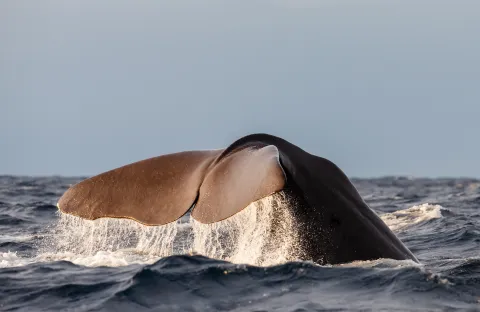
Sperm Whale:
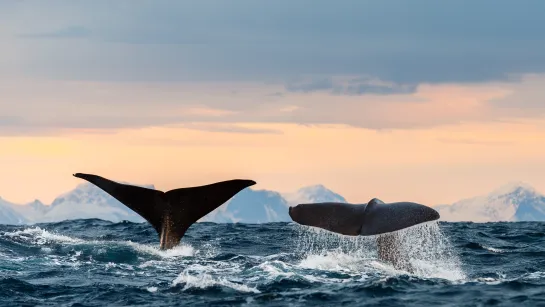
This is a signature species of the Arctic waters around Andøya. Known for their distinctive square heads and deep diving abilities, sperm whales are the largest toothed whale species and males can grow up to 18 metres long. These deep-diving giants can dive thousands of feet into the ocean in search of squid, including the mysterious giant squid. Their incredible adaptations to deep ocean living make them one of the most fascinating whale species. The individuals encountered around Andøya are exclusively adult males. While female sperm whales and calves live in stable social groups in warmer, lower-latitude oceans, mature males migrate north and south on their own. Around Andøya, they are found year-round, drawn by the deep submarine canyons and reliable access to prey. Female sperm whales are not observed in this region.
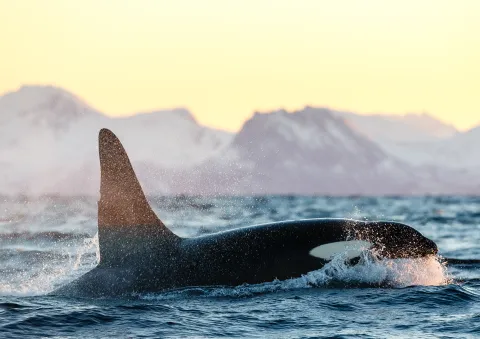
Orca (Killer Whale):
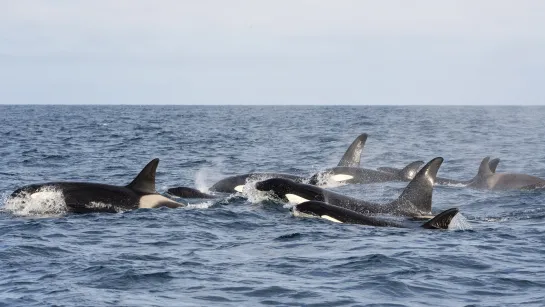
It is a common seasonal visitor in the Arctic waters off Andøya. One of the most iconic marine species, the orca is known for its striking black-and-white coloration. It is an apex predator and can grow up to 6–8 metres in length. Orcas have complex social structures and are highly intelligent, often hunting in coordinated pods. These animals are highly active and may be seen breaching or hunting in the wild.
Humpback Whale:
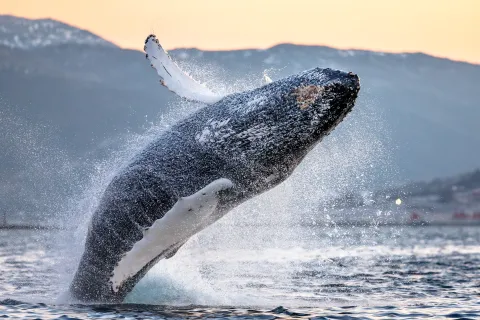
Famous for their haunting songs and acrobatic breaches, humpback whales are highly social and travel vast distances across the world’s oceans. They grow up to 12–16 metres, and their spectacular displays make them a favourite for whale watchers. Their complex songs are a fascinating topic for researchers studying whale communication.
Beluga Whale:
Rarer in these Arctic waters, but sightings have been recorded, the Beluga whale is smaller and usually only 5 metres in length. Often called the “canaries of the sea” for their wide range of vocalizations, beluga whales are more agile than other whale species. Their playful nature and ability to communicate with each other make them a fascinating subject of study.
Fin Whale:
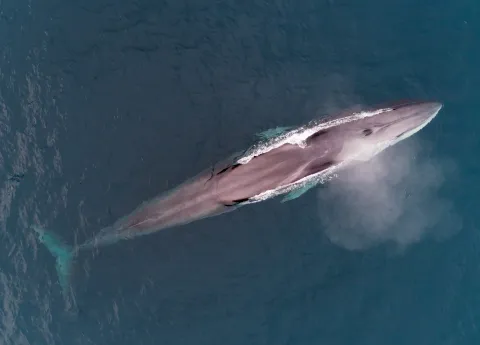
Common in Norwegian waters, they are known for their speed and are the second-largest whale species in the world, reaching up to 26 metres. These sleek, fast swimmers can reach speeds of up to 37 kilometres per hour. They feed on small fish and krill, and their migratory patterns are closely tied to seasonal changes in food availability.
Pilot Whale:
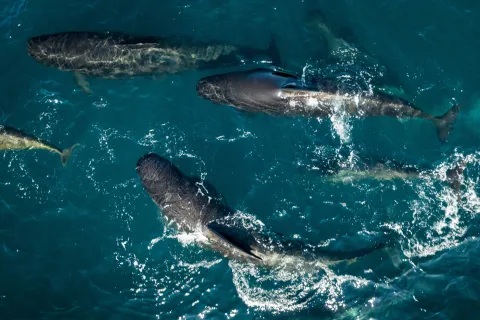
Pilot whales are social animals that live in tight-knit family groups. They are medium-sized whales (6 metres) with robust bodies and are often seen in large pods. These whales are known for their strong bonds with family members and can be observed engaging in cooperative hunting strategies.
Porpoises:
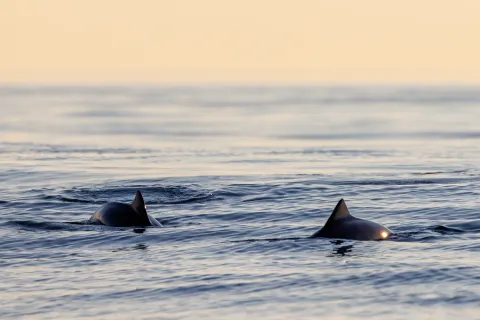
These small cetaceans are known for their playful behaviour and are often seen close to the coast, rolling at the surface. Around Andøya, the harbour porpoise is a relatively common species and can be observed year-round.
Dolphins:
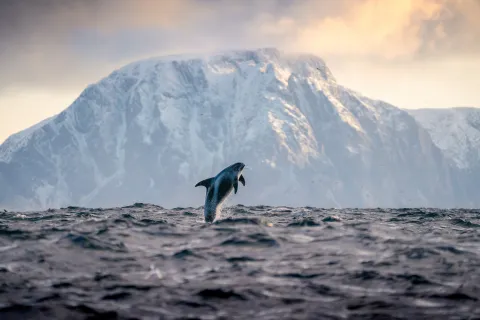
Known for their intelligence, social behaviour and acrobatics, dolphins are often seen in the same waters as whales. Several dolphin species occur worldwide, and around Andøya the most commonly observed species are white-sided dolphins and white-beaked dolphins.
Meaningful encounters: connecting humans with whales around the world
At The Whale, we believe that the most powerful way to engage with the ocean and its creatures is through meaningful encounters grounded in knowledge – and not just in the wild. Through immersive exhibits, The Whale provides an unparalleled opportunity to experience the wonder of these magnificent creatures up close.
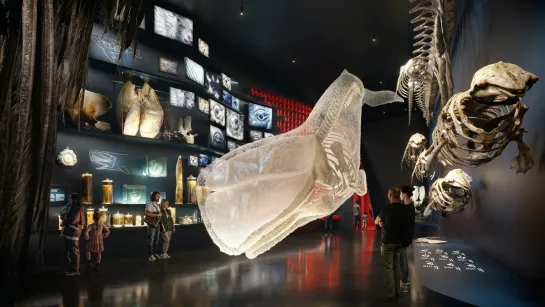
Here, visitors can learn about all 90 modern-day whale species around the world in the Species Gallery and learn how they have evolved over 50 million years. The Under the Skin rooms present the unique and fascinating parts of a whale from a curtain of baleen teeth to giant skulls to monumental whale ribs, and much more! Visitors can also experience what it may feel like in the deep-sea realm in the Below the Surface rooms, or they can be surrounded by the many sounds different whales make in the Soundscape.
From the basic biology and anatomy of these species - to the complex behaviours they exhibit, our exhibits are designed to engage visitors of all ages in a deeper conversation about conservation, sustainability and the importance of preserving marine ecosystems.

The Whale: leading the way in whale education
Our vision is to create the world’s most meaningful encounter between humans and whales, where education, art and history come together in harmony.
The Whale is an immersive experience designed to deepen your understanding of whales, their behaviour and their environment. Whether you’re interested about their role in the ocean ecosystem, exploring their biology or the intimate relationship between humans and whales, The Whale provides a unique opportunity to dive deep into the fascinating world of these ocean giants.
Our mission at The Whale is to create diverse and thought-provoking encounters. Through state-of-the-art exhibits, educational programmes and engaging displays, The Whale offers a one-of-a-kind opportunity to learn about the whale species. By combining ocean science with cultural history and artistic expression, The Whale gives visitors a comprehensive perspective on whales.

The Whale and the future of ocean conservation
The Whale helps shed light on how climate change, pollution and overfishing are threatening marine life and how humans can take steps to protect the oceans. Whales are key players in the health of marine ecosystems, and learning about their migration patterns, feeding habits and roles in nutrient recycling is vital to understanding how we can preserve the future of our oceans.
As one of the leading institutions for whale education and ocean science, The Whale plays a crucial role in fostering global awareness of the importance of whales and the deep ocean. An encounter with a whale, whether in the wild or through an educational experience at The Whale, is one of the most profound connections a person can have with the natural world.
By focusing on whale species, the Arctic ecosystem and the deep ocean, The Whale shapes a future where we can learn how to do more to help the ocean’s most magnificent creatures thrive, ensuring that these deep ocean giants continue to prosper for generations to come.