Whale watching in Norway: Best time and where to go
There are few places in the world where you can watch humpback whales as they slice through Arctic waters beneath snow-covered peaks. Fewer still where you can see a sperm whale lift its tail and disappear into a 1,000-metre dive just minutes after your boat leaves the shore.
Norway is one of those places, where whale watching is open-air, seasonal and unfolds before a backdrop of dramatic landscapes. With a little planning on when to go and the best bases, a whale-watching trip can become a unique Arctic experience – and a travel destination unlike any other.

Why Norway is one of the best places to see whales
Norway’s coastline stretches deep into the North Atlantic and Arctic waters, where cold, nutrient-rich currents support enormous fish stocks. These feeding grounds attract whales year after year, and not just sporadically, but consistently through the seasons. Unlike some destinations where whales are purely migratory and unpredictable, northern Norway offers reliability.
Why are these waters so rich in whale activity? A key advantage is geography. In Andenes (Vesterålen), in northern Norway, a deep underwater canyon lie very close to the shoreline. The continental shelf drops steeply just offshore, creating a perfect feeding ground for deep-diving species such as sperm whales, which is quickly accessible to whale-watching visitors by boat. And further north, near Tromsø and Skjervøy, vast schools of herring gather in winter, which orcas and humpbacks follow. To tap into this abundant marine wildlife, local operators are trained to work closely with marine biologists, use hydrophones to listen for vocalisations and naturally follow strict wildlife guidelines. This combination of geography, biology and mindful expertise makes Norway stand out as one of the most dynamic and rewarding whale-watching locations in the Northern Hemisphere.
Finally, the setting itself adds to the magic: calm fjords framed by snow-capped mountains and Arctic light provide a breathtaking backdrop for encounters with these ocean giants. Few places on Earth combine such reliable whale sightings with spectacular scenery and a strong culture of responsible wildlife tourism, making Norway an inspiring destination for anyone hoping to experience whales in the wild.

Best time to see whales in Norway
Choosing the right time is the most important decision you will make when planning your trip, however, it may be difficult to choose, because each season promises some unique whale watching and photo opportunities.
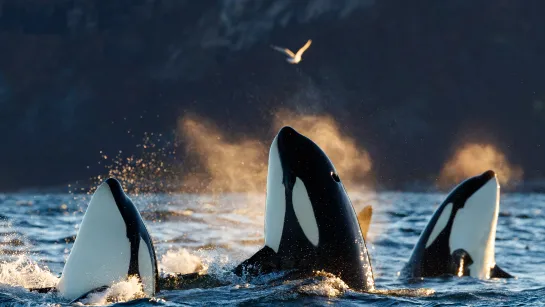
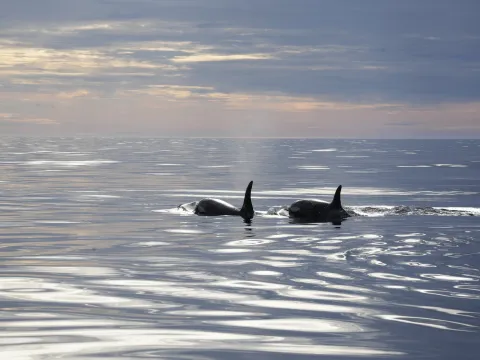
Winter is orca and humpback season. From late October through January, vast herring migrations draw large numbers of orca and humpback whales into the northern fjords. Orcas hunt cooperatively, often working in tight pods, while humpbacks lunge-feed through dense bait balls. This is peak season for intense action and photography. The light is low and Arctic-blue, the mountains brilliant white and the whale activity awe-inspiring. Plus, it is also the only period when you can realistically combine whale watching with Northern Lights viewing.
Keep in mind that winter trips require preparation. It’s cold, and sea conditions can be rough. But for many travellers, this is the perfect time to see whales truly thriving in their natural environment.
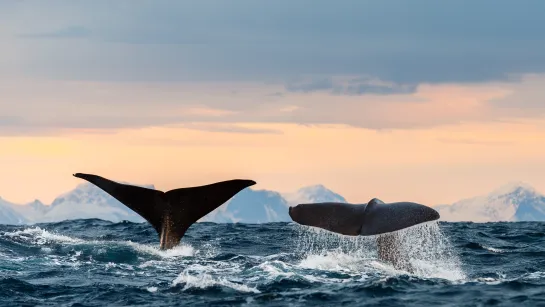
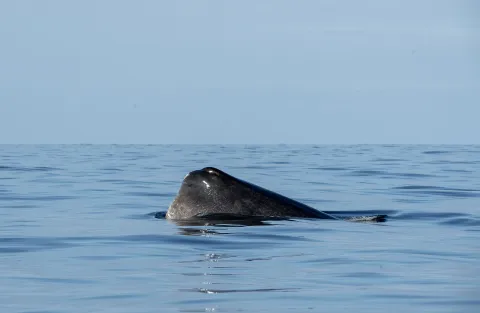
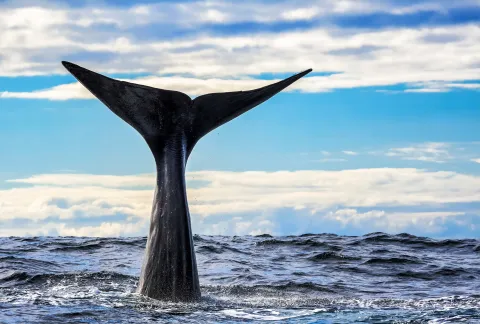
While winter focuses on feeding frenzies in fjords, spring offers something different - the steady presence of the sperm whale off Andenes. Sperm whales are deep divers, hunting squid in submarine canyons. They surface between long dives, often resting calmly before lifting their tail flukes and descending again. In Andenes, sightings are possible year-round, but the months of February to April bring longer daylight and often more stable sea conditions than mid-winter.
Summer whale watching is the peak season for sperm whale encounters, as well as a time when other coastal wildlife thrives. Under the midnight sun, you may also spot minke whales, pilot whales, and porpoises. The atmosphere is calmer, seas are often gentler, and you can combine whale watching with hiking, kayaking or road trips. If you prefer milder weather and extended daylight over dramatic winter conditions, the months from May to September offer the comfortable alternative.
Top places for whale watching in Norway
Your base will shape your whale watching experience. Together, Vesterålen, Tromsø and Lofoten form Norway’s premier whale-watching corridor. Here visitors experience both the richness of Arctic marine life and the dramatic beauty of Norway’s northern coastline.
The Vesterålen archipelago, just north of Lofoten, is widely regarded as one of the best places in Europe to see whales. In particular, the town of Andenes sits close to the edge of the continental shelf, where the deep underwater canyon known as Bleik Canyon attracts sperm whales throughout the year. Because these deep feeding grounds lie so near the coast, whale-watching boats can reach prime viewing areas quickly, making sightings frequent and reliable. It feels purpose-built for marine life exploration — smaller, focused and deeply connected to research.
Accessible and lively, Tromsø combines city comforts with winter whale expeditions. Many tours travel toward offshore feeding areas during peak season. If you want a balance of Arctic culture, restaurants and wildlife, Tromsø is practical and well-connected.
Smaller and more remote, Skjervøy becomes a winter hotspot when herring settle in surrounding fjords. During peak season, whales can appear remarkably close to shore. It is a favourite among photographers.

What whale species can you see?
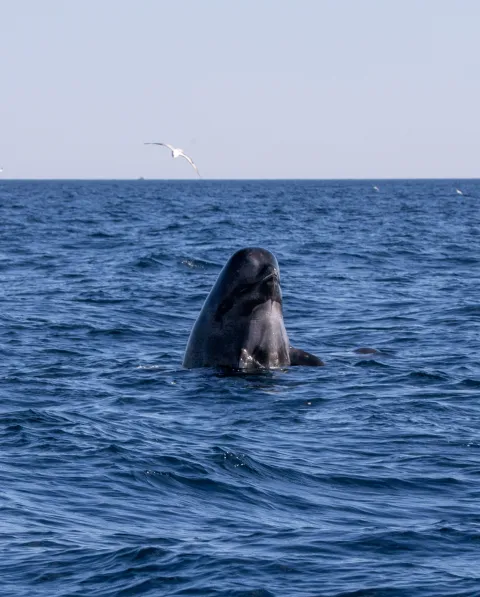
Norwegian waters host a variety of species, but encounters depend on season and location. Winter highlights are orca and humpback whales, often feeding in coordinated activities. Seeing multiple whales as they surface simultaneously is common during peak herring runs.
In Andenes, the sperm whale is the signature species. These whales can exceed 15 meters in length and are famous for their deep dives.
Summer brings more frequent sightings of minke whales - the smallest of the baleen whales found here - along with occasional pods of long-finned pilot whales and dolphin species such as white-sided and white-beaked dolphins. Orcas can also be spotted during the summer months in Andenes.
Every trip is different. Wildlife is never staged - and that unpredictability is part of the anticipation and excitement. What to expect on a whale watching tour A whale watching tour in Norway typically lasts between three and six hours. Boats range from larger heated catamarans to smaller high-speed rigid inflatable boats (RIBs) that sit closer to the water.
Tours typically begin with a short briefing about the whales, the local ecosystem and responsible wildlife viewing before the boat heads out into the open ocean.
The experience then unfolds slowly. Captains search known feeding areas, scan for blows on the horizon or listen for whale vocalizations. When whales are located, boats approach carefully, maintaining regulated distances. During the tour, visitors can expect a mix of science, scenery and unforgettable wildlife encounters. Guides and marine biologists often help spot whales, explain their behaviour and share insights into the marine environment, turning the experience into both an adventure and a learning opportunity.
Some days bring extended surface activity. Others involve patience between dives. It is not a theme park ride — it is time spent in a stunning and constantly moving Arctic ecosystem.
Expect to dress warmly - even in summer. Operators provide thermal flotation suits in winter, but layers, gloves and hats are essential. If you are prone to seasickness, preparation is wise, especially in winter conditions.
Combine whale watching with Northern Lights One of northern Norway’s greatest advantages is the possibility of seeing whales by day and the Aurora Borealis by night. Between November and January, darkness returns to the Arctic. After a day on the water near Tromsø or Skjervøy, you may spend the evening scanning the sky for green aurora arcs. Few destinations allow you to combine marine wildlife with one of the world’s most famous natural light displays in a single trip. For many travellers, this pairing defines the appeal of winter in northern Norway.

Visit The Whale in Andenes
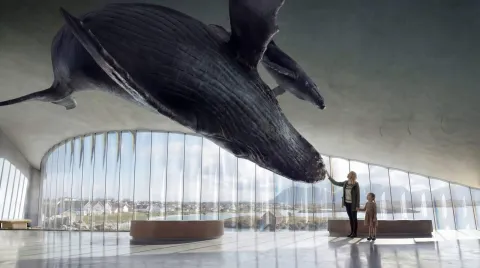
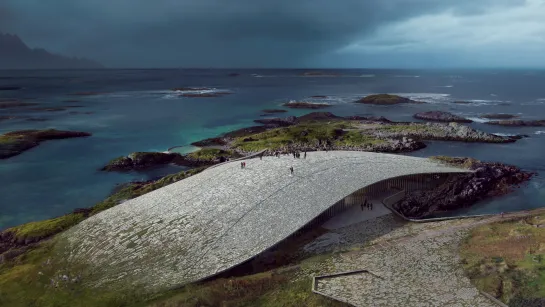
If you are traveling to northern Norway, consider a visit to The Whale. Located in Andenes, this modern architectural landmark serves as a centre for whale education, research and interpretation.
A visit to The Whale offers an immersive journey into the world of whales and the Arctic Ocean, where science, storytelling and nature come together. Through large-scale exhibitions, multimedia installations and scientific interpretation, visitors explore the lives of whales, their remarkable biology and their role within the wider Arctic marine ecosystem. The experience aims to connect people not only with the animals themselves but also with the ocean environment that supports them.
Exhibits explore whale biology, migration patterns and deep-sea ecosystems, but also cover the cultural, artistic and historical impact of these beautiful creatures over the centuries. In addition to learning about the species that inhabit the waters of northern Norway, visitors will reflect on the deep relationship between whales, the sea and humans through interactive displays, visual storytelling and art. The centre highlights the importance of ocean conservation.
Beyond the exhibitions themselves, the architecture and location of The Whale are designed to strengthen the connection between visitors and the surrounding landscape. Positioned at the edge of the ocean in Vesterålen, the building offers panoramic views across the sea where whales are often seen offshore. In this way, The Whale serves as both a cultural landmark and a gateway to the whale-watching experiences that have made Andenes famous.

Whale watching in Norway
Norway offers one of the rare places on Earth where dramatic landscapes and extraordinary marine life meet. With the right season and location, whale watching here becomes more than an excursion — it becomes a powerful Arctic experience. Whether you visit in winter for feeding orcas or in spring for deep-diving sperm whales, the waters of northern Norway promise encounters you will never forget.
FAQ
- When is the best month for whale watching in Norway?
-
November and December are typically peak months for orcas and humpbacks due to the herring migration.
- Where is sperm whale watching most reliable?
-
Andenes offers some of Europe’s most consistent sperm whale sightings.
- Is whale watching guaranteed?
-
No. These are wild animals. However, peak winter and Andenes sperm whale seasons offer high success rates.
- Can you see whales without a boat?
-
Occasionally, especially during winter near Skjervøy, but boat tours dramatically increase your chances.
- Is it suitable for families?
-
Yes, though winter tours may be physically demanding due to cold and sea conditions.