The Whale Kingdom of the North
Why Andøy is one of the best places in the world to observe whales. Travel to northern Norway for whales, wildlife and Arctic nature. Discover why Andøy is one of the best places in the world to observe whales and experience the raw beauty of the Arctic.
Travelling in northern Norway calls up images of dramatic nature, remote landscapes and unforgettable wildlife. For many visitors planning holidays to Norway, names like the Lofoten Islands, Tromsø Norway and the Northern Lights in Norway come to mind. Yet, just north of the Lofoten archipelago lies Andøy, part of the Vesterålen region. This is a destination that offers something truly exceptional – not least because here, whales are the defining presence of this Arctic seascape.
Northern Norway is a land of wild beauty, a place where nature’s most captivating phenomena unfold against a backdrop of pristine landscapes and untouched waters. For travellers seeking a blend of adventure, culture and breathtaking wildlife, Andøy and the surrounding Vesterålen region are essential stops. But what truly sets this part of the world apart is its status as one of the top whale-watching destinations on the planet.
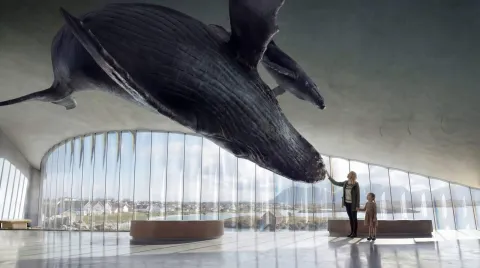
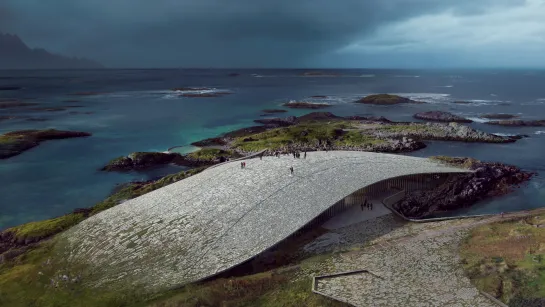
Whether you’re following the pull of the Northern Lights, the midnight sun or the raw Arctic wilderness, Andøy offers more than just stunning landscapes. It provides the rare opportunity to experience whales in their natural habitat – an encounter that is awe-inspiring and educational. Visitors can also spend a day at The Whale, a state-of-the-art cultural and educational centre located in Andenes, where they can deepen their understanding of whales and other Arctic marine life.
For travellers seeking Norway nature at its most raw and authentic, Andøy delivers encounters that feel both rare and deeply grounded.
The perfect location for whales and whale watching
Just above the Arctic Circle lies Andøy, where the open Atlantic meets the edge of the continental shelf, making it one of the most remarkable places for whale encounters. While Lofoten Norway is famous for its peaks and fishing villages and Tromsø Norway for its city life and Northern Lights tours, Andøy offers direct access to deep ocean waters and one of Europe’s richest marine ecosystems – and whales.
Unlike many whale watching Norway destinations that rely on seasonal migrations alone, Andøy offers encounters throughout the year. This is due to its geography, not chance. Where the seabed drops steeply lies Bleiksdjupet, also known as Bleik Canyon. Here, cold, nutrient-rich water is pushed upwards by ocean currents in a process known as upwelling. This creates a highly productive marine environment, supporting plankton, fish and ultimately large numbers of whales.
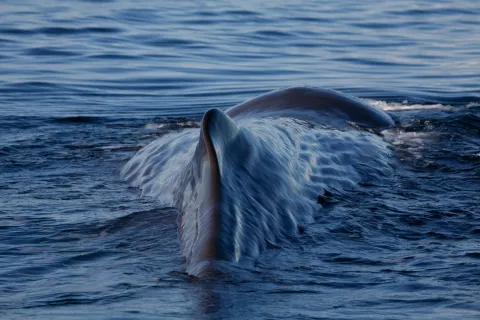
Bleik Canyon is located just ten kilometres offshore, bringing deep ocean waters closer to land than almost anywhere else in Europe. This proximity allows visitors to encounter a wide range of whale species on relatively short boat trips. Common species include sperm whales, which can be observed year-round. These are male sperm whales that reside here permanently, diving deep to hunt squid. As the world’s largest toothed whale, reaching up to 18 metres in length and weighing as much as 45 tonnes, each encounter is unforgettable.
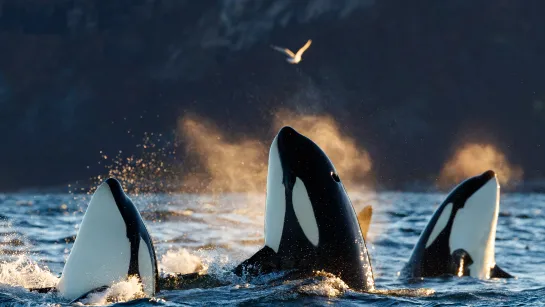
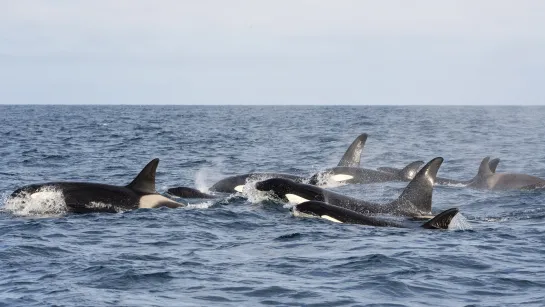
In winter, from late November to late January, the experience expands beyond Andøy to the wider coast of northern Norway. In recent years, particularly around Skjervøy in Troms, vast shoals of spring-spawning herring have gathered along the coast and deep into the fjords, drawing large predators close to shore. Orcas are the most iconic visitors during this period, often joined by humpback whales and fin whales.
Around Andøy, several whale species are present throughout the year. Pilot whales and minke whales are regularly encountered, and a variety of dolphins are also common, including white-beaked dolphins, Atlantic white-sided dolphins and harbour porpoises. Together, this creates a year-round diversity of marine life found in few other places in Europe.

Andenes, the birthplace of whale watching in Norway
Andenes plays a pivotal role in Norway’s tourism history. In 1988, it became the first place in the country to establish organised whale watching. Since then, Andenes, Norway has grown into one of the world’s most respected whale watching destinations, attracting around 50,000 visitors each year.
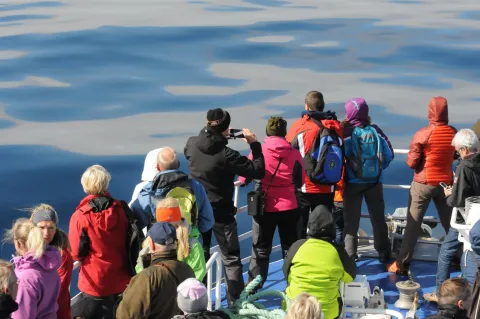
What distinguishes Andenes from many other whale watching Norway locations is its strong link to research and conservation. Several operators incorporate scientific work into their tours, collecting data and identifying individual whales using photo catalogues. Visitors are not just observing whales but contributing to international research networks involving scientists and students from across Europe and beyond.
This research-based approach adds depth to the experience. Encounters are framed with knowledge and context, helping visitors understand whale behaviour, migration patterns and the fragile balance of Arctic marine ecosystems.


Coastal wildlife
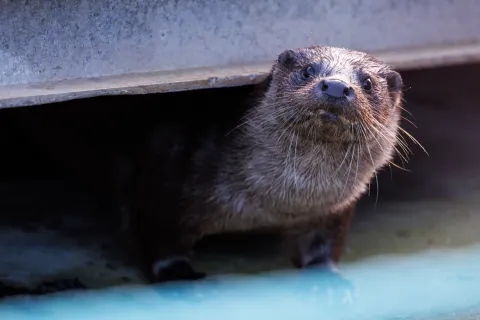
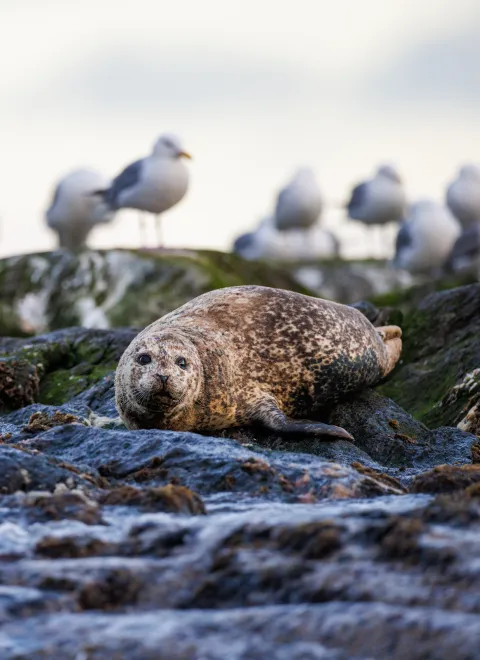
Although whales are the main draw, Andøy’s wildlife extends far beyond the sea. The richness of the canyon influences the entire coastal ecosystem. Harbour seals and otters are frequently seen along the shore, and even the plankton-feeding basking shark, which can grow up to twelve metres long, occasionally appears in these waters. These sightings highlight just how productive and intact this marine environment remains.
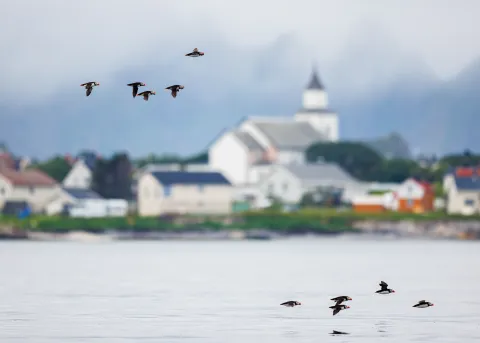
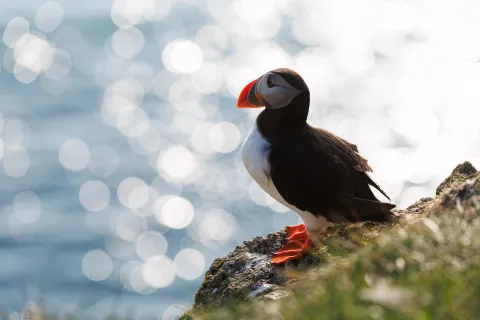
The coastline is one of the richest bird areas in northern Norway, offering outstanding birdwatching opportunities. Just offshore lies Bleik Island, home to one of Norway’s largest puffin colonies during summer.
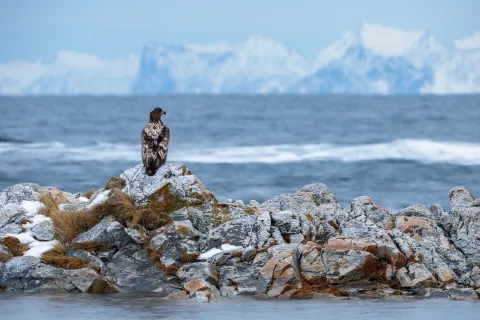
Puffins share the cliffs with kittiwakes, shags, cormorants, guillemots, razorbills and Arctic skuas. Further west, gannets nest in large numbers, making the archipelago an important seabird habitat. Daily birdwatching safaris offer close-up encounters, and sightings of white-tailed eagles are considered guaranteed.
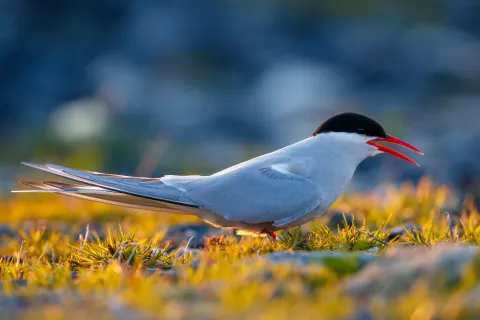
The Arctic tern, known for the longest migration of any bird species, also visits the area, linking Andøy to ecosystems across the globe. Together, these species reinforce Andøy’s reputation as one of the most wildlife-rich destinations in north Norway.

Experiencing Andøy on land and sea
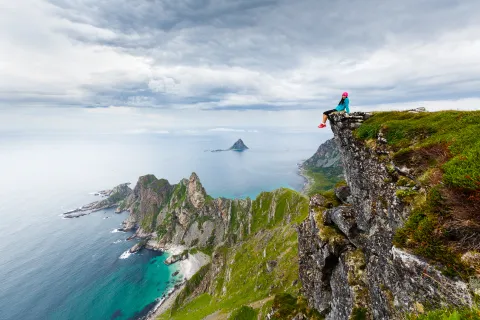
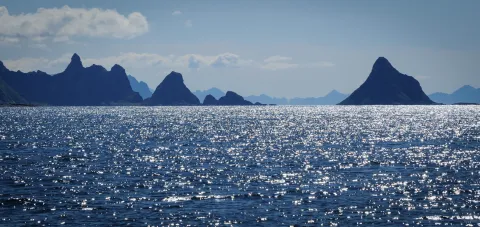
For travellers planning a Norway vacation that balances wildlife with outdoor activity, Andøy offers a wide range of experiences. Hiking routes lead to the summits of jagged peaks, offering sweeping views across the ocean and towards the Lofoten Islands on clear days. Cycling is another popular way to explore the island, with quiet roads and ever-changing Arctic light.
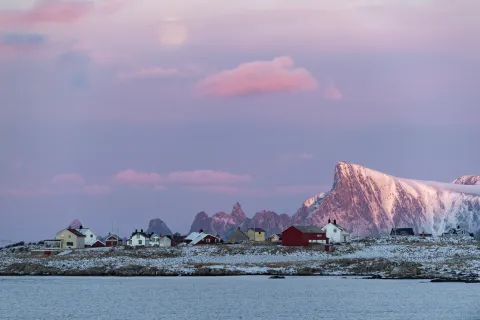
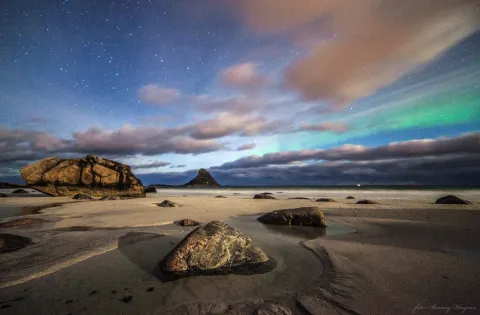
If relaxation is the priority, Andøy’s beaches are among the most striking in Norway. Long stretches of white sand and clear water create a sense of space and calm. These beaches are beautiful under the midnight sun in Norway during summer and equally atmospheric beneath winter skies.
Anglers are drawn to the region’s lakes and rivers, where salmon and trout are abundant. Offshore, deep-sea fishing provides opportunities to catch larger species, guided by the same ocean currents that support whales and seabirds.
Kayaking along the coastline offers a more intimate encounter with Norway nature. From the water, seals, seabirds and dramatic rock formations appear at eye level, creating a quiet and immersive way to experience the landscape.
Northern Lights and midnight sun experiences
While Andøy is best known for whale watching, it also offers classic Arctic phenomena that define holidays to Norway. During winter, the island is well placed for Northern Lights Norway experiences. Far from city light pollution, clear nights often reveal vivid aurora displays. For travellers researching the best time to see the Northern Lights in Norway, the period from late autumn to early spring offers strong conditions.
In summer, the midnight sun Norway phenomenon transforms the landscape. Continuous daylight allows for long hikes, late-evening kayaking and beach walks under golden light. This contrast between winter darkness and summer brightness is central to the rhythm of life in the Arctic Circle Norway.

Andøy: a must-see stopover on northern Norway travel
Geographically, Andøy sits between the Lofoten Islands and Tromsø, making it a natural extension to classic Norway travel itineraries. Many visitors combine Lofoten Norway, Vesterålen and Tromsø Norway into a single journey, discovering how each region offers a distinct perspective on north Norway.
As Norway tourism continues to grow, Andøy remains rooted in what makes it unique. It offers authenticity rather than spectacle, knowledge rather than novelty, and encounters shaped by nature rather than schedules. For those planning Norway holidays or researching Norway tours focused on wildlife, Andøy offers something rare. Andøy is the gateway to Arctic wildlife – a place where whales are not distant or occasional but central and constant. It invites visitors to slow down, observe and understand the living systems of the Arctic. In a world where many destinations compete for attention, Andøy stands apart by simply being what it is. A place where deep ocean meets land, where wildlife thrives and where encounters with whales remain genuine, powerful and unforgettable.